Sofia Coppola directed Lick The Star in 1998. Like most of her films, this black and white short is about a little girl.
I like the non-linear way Coppola approaches her stories. She doesn't set up villains or heroes so much as she evokes moods and feelings by dwelling on some moments and breezing through others. Its as though some scenes are cut short, not because it's a short film but because the capriciousness of the 7th grade girls demand that the scenes be cut short.
You know? Like, whatever. =)
Thursday, June 17, 2010

Monday, June 14, 2010
Untitled Science Fiction Film: Scene 5
I shot this short film scene with my friend Sam Higgins to complete an assignment for Cinematography 309 at Brooks Institute. We were a crew of two. I was inspired by the opening scene of Blade Runner, where Leon shoots the guy for asking about his mother. I wanted a high contrast film noir look.
If I had to do it again, I would have added a fill light with a 1/2 CTB to bring out some more detail in the shadow while maintaining the illusion of darkness. Blue light is a common technique for shooting dark scenes with video.
Shooting this scene with only two people was a big challenge. I tended to the camera while Sam attempted to both direct and hold the boom. If we only had one more crew member, we could have focused more on the lighting.
Sam and I had a look in mind and I think we accomplished it. Looks great! But It would have been best if we could have justified the look a bit. Such as, why is there so much smoke? Why is it so dark? Is this scene Noir for the sake of Noir?
All things considered, I am proud of the outcome. I can't wait until next session.
After school, I plan to return to Seattle. I would like to get employment working on corporate videos and commercials but also to applying my skills as a Seattle film maker towards independent projects.
If I had to do it again, I would have added a fill light with a 1/2 CTB to bring out some more detail in the shadow while maintaining the illusion of darkness. Blue light is a common technique for shooting dark scenes with video.
Shooting this scene with only two people was a big challenge. I tended to the camera while Sam attempted to both direct and hold the boom. If we only had one more crew member, we could have focused more on the lighting.
Sam and I had a look in mind and I think we accomplished it. Looks great! But It would have been best if we could have justified the look a bit. Such as, why is there so much smoke? Why is it so dark? Is this scene Noir for the sake of Noir?
All things considered, I am proud of the outcome. I can't wait until next session.
After school, I plan to return to Seattle. I would like to get employment working on corporate videos and commercials but also to applying my skills as a Seattle film maker towards independent projects.
Tuesday, June 8, 2010
War Prayer
I met Harold Cronk on set for a casino commercial I worked on two years ago. I was a production assistant on that shoot. I was pretty green to professional sets back then and I was pretty nervous. They attached me to the assistant camera. That was quite the learning experience, grabbing lenses and slating the camera.
I keep an eye on what Harold is up to because of this short film:
I love the textures of this film. It really feels muddy, doesn't it?
Recently he was production designer on Abram Makowka's Tug. He also has a project in post production titled Jerusalem Countdown.
I keep an eye on what Harold is up to because of this short film:
War Prayer (short film) from TiM on Vimeo.
I love the textures of this film. It really feels muddy, doesn't it?
Recently he was production designer on Abram Makowka's Tug. He also has a project in post production titled Jerusalem Countdown.
Monday, May 31, 2010
Donut Shop
This is a short documentary about what happens in a donut shop. Simple idea. I love it. One of the best ways to get people to talk is to ask them about what they love. And generally, what they have to say is pretty interesting. So go find people who love weird things and talk to them. Such as, people who live at Starbucks!
If you like that, you might check out the other films. Its a project by director Alex Jablonski (Blue Boy) and his goal is to make a new documentary short every month for one year. The products are manic little testaments to the joy of film making. The narration is often a bit overt and sometimes uneven but I like it. Its raw.
Sparrow Songs - Episode 5 - The Donut Shop from Sparrow Songs on Vimeo.
If you like that, you might check out the other films. Its a project by director Alex Jablonski (Blue Boy) and his goal is to make a new documentary short every month for one year. The products are manic little testaments to the joy of film making. The narration is often a bit overt and sometimes uneven but I like it. Its raw.
Sunday, May 16, 2010
The Tea Party's Robin Hood
Errol Flynn is not in this movie. Sorry to break your hearts but this is not a re-make or even a re-telling. It is a separate work to be appreciated on its own and free from comparisons. Its gritty. It drinks mead. And much like the story of English folklore, it is told not only to entertain but also to carry rhetorical message.
I am con vinced many films are born out of whimsy. Danny Boyle really wanted to make a Bollywood movie and thus we have Slumdog Millionaire. Likewise, Riddley Scott thought it would be really funny if Robin Hood was a hero of libertarian principles. Libertarian ideas are popular in film. Look at Iron Man.
Crowe's Robin Hood has two notable opportunities to deliver his political view of the world. In the exposition, he declares that the common man has the power to make England rich. In the conclusion, he preaches the values of liberty and the natural rights included within the American constitution. He was truly ahead of his time, wasn't he?
Also, the evil power hungry King John has a beautiful scene in which he blames his predecessor's futile war. He says he inherited so many problems. Sound familiar? He also concludes that the kingdom has no choice but to tax its way out of debt.
This is a story about politics. To keep your attention, Mr. Scott delivers plenty of action and cinematographer John Mathieson gives us all the glitter and glamor we expect from a meticulously crafted story.
Scott is obviously planning for a sequel. The entire film feels like exposition and thus it feels shallow and simple. The philosophical scenery is painted in broad strokes of black and white. If Brian Helgeland's story is to develop this story, he wants to lay a thick foundation and save the subtle touches for the sequel. The irony being, there probably won't be a sequel. If Scott was serious about making a sequel, he should have dropped some Easter Egg clues to the potential development.
Negative reviews such as from The Village Voice express a lament over the film's failure to deliver on the initial hype of the film. I see opportunity to make right on these wrongs in a sequel. What we have is the groundwork for blockbuster sequel of Matrix proportions.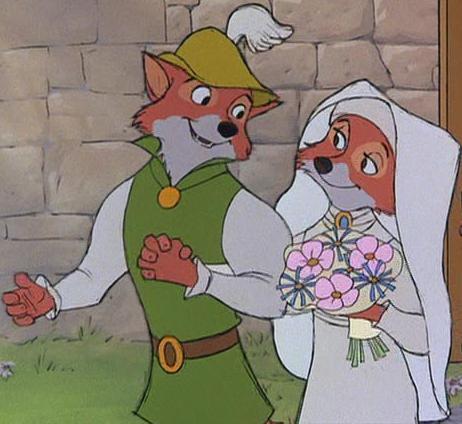 What the Larry and Andy Wachowski did for Descartes, Riddly Scott has the potential to do for John Stewart Mills.
Scott's Robin Hood ultimately failed with critics because they are unable to separate the folk lore from its previous interpretations. Errol Flynn's gaiety and Disney's cute Socialist undertones are difficult icons to overcome because they are so ingrained into pop culture and remain powerful after several decades.
My question is, why does Robin Hood fail where Batman succeed? It is strictly politics?
I am con
vinced many films are born out of whimsy. Danny Boyle really wanted to make a Bollywood movie and thus we have Slumdog Millionaire. Likewise, Riddley Scott thought it would be really funny if Robin Hood was a hero of libertarian principles. Libertarian ideas are popular in film. Look at Iron Man.Crowe's Robin Hood has two notable opportunities to deliver his political view of the world. In the exposition, he declares that the common man has the power to make England rich. In the conclusion, he preaches the values of liberty and the natural rights included within the American constitution. He was truly ahead of his time, wasn't he?
Also, the evil power hungry King John has a beautiful scene in which he blames his predecessor's futile war. He says he inherited so many problems. Sound familiar? He also concludes that the kingdom has no choice but to tax its way out of debt.
This is a story about politics. To keep your attention, Mr. Scott delivers plenty of action and cinematographer John Mathieson gives us all the glitter and glamor we expect from a meticulously crafted story.
Scott is obviously planning for a sequel. The entire film feels like exposition and thus it feels shallow and simple. The philosophical scenery is painted in broad strokes of black and white. If Brian Helgeland's story is to develop this story, he wants to lay a thick foundation and save the subtle touches for the sequel. The irony being, there probably won't be a sequel. If Scott was serious about making a sequel, he should have dropped some Easter Egg clues to the potential development.
Negative reviews such as from The Village Voice express a lament over the film's failure to deliver on the initial hype of the film. I see opportunity to make right on these wrongs in a sequel. What we have is the groundwork for blockbuster sequel of Matrix proportions.
What the Larry and Andy Wachowski did for Descartes, Riddly Scott has the potential to do for John Stewart Mills.Scott's Robin Hood ultimately failed with critics because they are unable to separate the folk lore from its previous interpretations. Errol Flynn's gaiety and Disney's cute Socialist undertones are difficult icons to overcome because they are so ingrained into pop culture and remain powerful after several decades.
My question is, why does Robin Hood fail where Batman succeed? It is strictly politics?
Subscribe to:
Comments (Atom)
